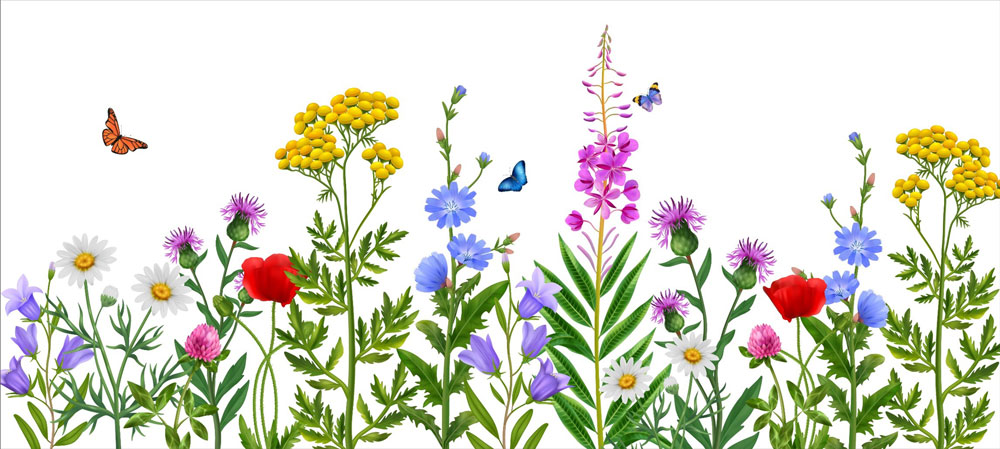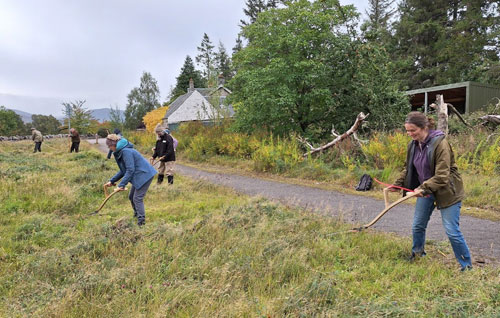
Wildflower meadows in the UK have declined by approximately 97% since the 1930s when many fields used to be managed as traditional hay meadows cut in late July/August and then grazed over the winter. Whilst the Errogie Corner is a very small area, we hope to demonstrate how important native wildflower areas can be for biodiversity and encourage others in the community to consider managing small areas of their garden/land in a similar way. Why are meadows so amazing?
- They provide a brilliant foraging areas for bees, butterflies, birds and small mammals
- Species rich grasslands can significantly improve carbon storage in the soil
- Old grasslands can have very diverse fungal networks
- Up to 140 plant species can be found in a single meadow!
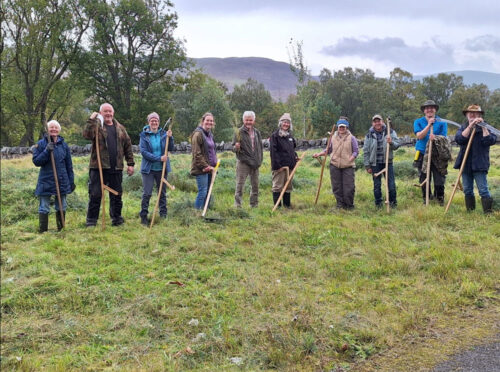
Errogie corner will be left to grow over the summer and cut in August/September once most of the flowers have set seed, and then the cuttings will be removed to reduce the nutrients going into the soil, as most meadow species thrive in nutrient poor soil with low fertility. We have added some native wildflower seeds after cutting, such as yellow rattle, which parisitises vigourous grasses, weakens them and allows space for more wildflowers. We will also actively remove non-native invasive species such as lupin and ground elder to prevent them from taking over and reducing the amount of native wildflowers. Native species such as thistles and nettles (which in their own right are great for wildlife) will not be eliminated but controlled to stop them dominating and enable a richer diversity of wildflower species to develop.
Whilst we have added some annual seeds such as cornflower and poppy to add a splash of colour, here we’re aiming to mostly let native wildflowers naturally colonise the meadow by managing it in a certain way so it may not necessarily be the riot of colour that you sometimes see on roundabouts or in urban areas, but it will be providing valuable wildlife habitat.